If you’ve ever stood in the cereal aisle, hauled a sack of garden soil, or stacked bulk birdseed for a community feed store, you’ve likely held a woven bag. But what you might not realize is that not all woven bags are created equal. For the last seven years, I’ve run a small, specialized operation as a functional woven packaging bags supplier—and I’ve lost count of how many times clients have come to me confused, asking why a $0.50 standard woven bag won’t work for their fertilizer, their frozen seafood, or their fragile agricultural seeds. The difference isn’t just in the name; it’s in the design, the materials, and the work they’re meant to do. Let’s break this down, straight from the shop floor, no industry jargon left untranslated. Functional Woven Packaging Bags

First, let’s start with what a regular woven bag is. I still remember my first year in the business, when a local hardware store owner asked for “just any woven sack” to hold 50 pounds of landscape rock. He didn’t care if it frayed after two uses, or if rain soaked through and made the rock too heavy to lift. Regular woven bags—often called standard woven sacks or general-purpose woven bags—are the workhorses of the low-stakes world. They’re made from basic polypropylene (PP) resin, the same stuff that makes disposable straws and grocery produce bags, extruded into flat tapes that are woven into a plain, open grid.
The key features of a regular woven bag are simplicity and cost. The weave is loose, usually a plain weave with gaps big enough that small dust or sand can leak through if the bag is jostled. The sides and bottom are heat-sealed crudely, not reinforced, and there’s no coating to block moisture. These bags are designed for one or two trips max. You’ll find them at farmers markets holding small loads of produce, or at construction sites for debris that gets hauled straight to a landfill. They’re cheap to manufacture—we can churn out 10,000 of these a day for under a penny each—and they’re meant to be disposable, not a long-term solution. I’ve had clients come back to me after using regular bags for animal feed, only to tell me half the feed got moldy within a week because the weave let in rain and the PP wasn’t UV-stabilized. That’s the trade-off: regular woven bags are cheap, but they’re not built to protect or preserve.
Now, functional woven packaging bags. These aren’t just thicker versions of the same weave. They’re engineered. Let’s take an example from a client of mine, a fertilizer company that supplies agricultural co-ops across the Midwest. A few years ago, they were losing 12% of their product during shipping—either the bags tore open along the highway, or the nitrogen in the fertilizer reacted with moisture and clumped into unusable lumps. They tried regular woven bags first; within three months, they were back, frustrated, because the standard bag’s loose weave let in dew and the plastic degraded from UV light while sitting on truck beds. That’s when they switched to our functional woven packaging bags, and now their loss is under 2%. The difference starts with the resin: we use a high-grade, food-safe (or industrial-grade, depending on the product) PP resin, not the cheap, recycled resin that regular bag manufacturers often use. We add UV stabilizers and antioxidants to the resin before extrusion, so the tape doesn’t break down from sun or temperature swings—critical for products that sit in outdoor storage for months, like seed or soil.
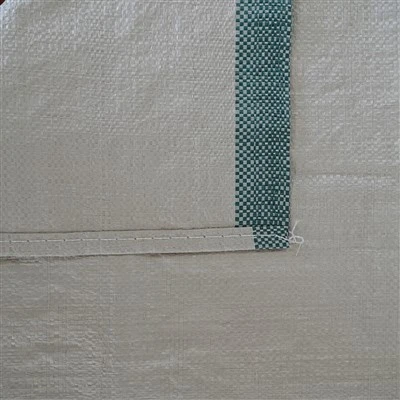
Next, the weave. Functional woven bags have a tighter, more uniform weave. We use a plain weave too, but the tape is thicker, and the gaps between the threads are almost non-existent. For products that need to be dust-proof or moisture-proof, we add a lamination layer—usually a thin layer of low-density polyethylene (LDPE) or linear low-density polyethylene (LLDPE) that’s heat-bonded to the inner weave. That lamination is what stops rain from seeping in or fine particles of flour, fertilizer, or powdered milk from leaking out. But not all laminations are the same, either; we use food-safe laminations for food products, and puncture-resistant laminations for heavy loads like metal parts or construction aggregate. A friend who runs a seafood processing plant told me they switched to our functional bags for frozen fish because regular bags would freeze to the pallets during shipping, tearing when workers pulled them off. Our bags have an anti-static, slip-resistant coating that prevents that freeze-and-tear, cutting their pallet damage by 18%.
Then there’s load capacity and reinforcement. Regular woven bags are rated for 25 to 50 pounds max, and that rating is almost never tested in real conditions. A standard 50-pound bag might tear if you fill it full and drop it from 3 feet, because the bottom is only sealed with two thin lines of heat. Functional woven packaging bags are tested to withstand up to 100 pounds (and even higher for industrial loads), because we add reinforced stitching along the bottom and the sides. We also add loops or handles for easier lifting, which regular bags almost never have. For agricultural clients who need to load 50-pound seed bags onto tractors all day, the handles aren’t a luxury—they’re a safety feature that prevents workers from straining their backs.
Another big difference is adaptability. Functional woven bags can be customized for almost any product, which regular bags can’t. We make bags with tear-resistant vents for produce that needs to breathe, like onions or potatoes—vents that are small enough to keep dirt in, but big enough to let moisture escape so the produce doesn’t rot. We make anti-UV bags for outdoor garden supplies, so they don’t degrade when left in a garden center parking lot for months. We even make heat-sealable bags for powdered products like coffee creamer, that maintain an airtight seal to keep the product fresh for up to a year. Regular bags can’t do any of that. If you ask a standard bag manufacturer for a vented bag, they’ll tell you it’s not worth the extra cost, because it’s designed for one use, not for shelf stability.
Let’s talk about durability and sustainability too, because that’s a big point clients bring up lately. A lot of people assume regular bags are better for the environment because they’re thinner, but that’s not always true. Regular woven bags are designed to be thrown away after one use, so they end up in landfills where they take 20 to 30 years to break down. Functional woven bags, on the other hand, are built to last—our standard functional bag can be reused 5 to 7 times, making them a far more sustainable option for businesses that are looking to reduce packaging waste. A feed client of mine switched to our functional bags and saw their packaging waste drop by 60% because their customers would return the empty bags to reuse for next season’s feed. Plus, our functional bags are made from recyclable PP, so when they do reach the end of their life, they can be melted down and made into new plastic products, unlike laminated regular bags that often can’t be recycled because the layers separate.
I want to be clear: I’m not here to say regular woven bags are useless. They have a place. For a local bakery that’s giving away 2-pound sacks of flour at a pop-up market, or a school that’s using bags to hold craft supplies for a one-time event, regular woven bags are perfect—cheap, easy to get, and do the job they’re meant to do. The problem comes when businesses try to use regular bags for something they’re not designed for, and end up losing product, wasting money, or disappointing their customers. That’s where functional woven packaging bags come in. They’re not a luxury; they’re an investment that pays off in less product loss, less downtime, and happier clients.
Over the years, I’ve had a lot of customers come to me saying, “I just need a bag to hold X,” and after asking them a few simple questions—will this be stored outdoors? Does it need to keep moisture out? Will it be reused? How much will it weigh?—I can point them to the right product. A 50-pound bag of onions needs a vented, breathable functional bag. A 50-pound bag of construction debris? Regular woven is fine, because it’s thrown away once. A 100-pound bag of metal fasteners that needs to stay rust-free? Functional, laminated, puncture-resistant. It all comes down to matching the bag to the job, not just picking the cheapest option.
If you’re reading this and wondering which bag is right for your business, or if you’re tired of losing product because your current packaging isn’t up to the task, I’d be happy to walk you through the options. As a functional woven packaging bags supplier, my goal isn’t just to sell you a bag—it’s to find a solution that works for your specific product and needs. Don’t settle for a one-size-fits-all bag that will leave you disappointed; reach out to discuss your requirements. We can develop a custom woven packaging solution tailored to your product, your shipping process, and your budget, so you can stop worrying about packaging failures and start focusing on growing your business.
Colored PP Woven Bags References
- Plastic Packaging Association. (2022). Woven Polypropylene Bags: A Comparative Analysis of Standard vs. Functional Grades.
- Food and Agriculture Organization of the United Nations. (2021). Packaging Solutions for Agricultural Bulk Commodities.
- Sustainable Packaging Coalition. (2023). Life Cycle Assessment of Woven Packaging Bags for Industrial and Commercial Use.
- Journal of Packaging Technology and Science. (2020). Performance Characteristics of Laminated Woven Polypropylene Bags for Moisture-Sensitive Products.
Jining Shunxing Plastics Co., Ltd.
Jining Shunxing Plastics Co., Ltd. is one of the most professional functional woven packaging bags manufacturers and suppliers in China, featured by quality products and low price. Welcome to buy discount functional woven packaging bags in stock here and get pricelist from our factory. We also accept customized orders.
Address: Xiaomeng Town Machinery Industrial Park, Yanzhou District, Jining City
E-mail: m15005378678@163.com
WebSite: https://www.sxwovenbag.com/
