If you’re tasked with storing corrosive, reactive, or high-hazard chemicals, the stakes of storage missteps don’t exist. As a supplier of double-walled tanks, I get asked this question at least a dozen times a week: Can a double-walled tank actually be used for chemical storage without risking leaks, contamination, or safety hazards? The short answer is yes—but it’s not a one-size-fits-all solution. Over the past 12 years in this industry, I’ve seen clients use double-walled tanks for everything from industrial acids to volatile solvents, but I’ve also seen others choose them for the wrong chemicals, or misconfigure them, leading to costly mistakes. Today, I’m breaking down exactly how double-walled tanks work for chemical storage, the dos and don’ts, and why they’re often the safest bet for facilities that handle high-risk substances. Double-walled Tank
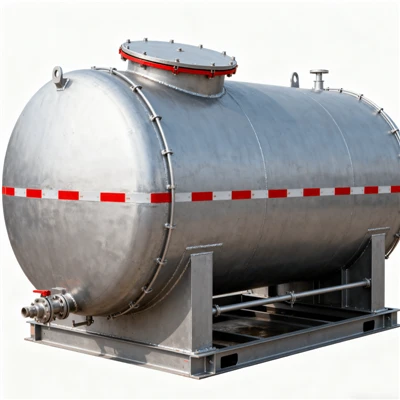
First, let’s start with the basics: what makes a double-walled tank different from a single-walled one? A single-walled tank is just a single layer of material (usually steel, polyethylene, or fiberglass) that holds your chemical directly, with no backup if a crack, pinhole, or weld failure occurs. A double-walled tank has two separate layers: an inner tank that holds the chemical, and an outer, secondary containment tank that surrounds the inner one with a gap (usually 1 to 6 inches, depending on the tank’s size and intended use). That gap is where the magic happens— it’s designed to catch any leaks from the inner tank before they escape into the environment, contaminate nearby surfaces, or pose a safety risk to workers.
For chemical storage, this design is a game-changer for two big reasons: leak detection and environmental/regulatory compliance. Let’s talk about leak detection first. Most double-walled tanks come with a monitoring system—either a simple pressure gauge or a more advanced sensor that sits in the gap between the two walls. If the inner tank develops even a tiny leak, the chemical will seep into the gap, and the sensor will trigger an alert (or the gauge will drop) letting your team know immediately. With a single-walled tank, you might not notice a leak for weeks—by then, the chemical could have pooled under the tank, seeped into groundwater, or corroded nearby equipment. I once had a client in the food and beverage industry that switched from single-walled to double-walled tanks for food-grade citric acid; six months later, the sensor caught a pinhole leak that a routine visual inspection never would have. They avoided a $12,000 cleanup bill and a potential EPA fine—That’s the value of that second wall.
Then there’s compliance. If you’re storing chemicals in the U.S., you’re probably familiar with EPA’s Spill Prevention, Control, and Countermeasure (SPCC) rule, or OSHA’s Process Safety Management (PSM) standards for high-hazard chemicals. Many state environmental regulations also require secondary containment for chemical storage tanks, especially for quantities over 5,000 gallons. A single-walled tank might count as its own secondary containment if it’s inside a diked area, but diked areas take up valuable floor space, are messy to maintain, and can be prone to their own leaks. Double-walled tanks are a compact, code-compliant alternative that saves space and reduces maintenance. A pharmaceutical client I work with in the Midwest told me they cut their diked area footprint by 40% after switching to double-walled tanks for their batch storage of ethanol and hydrochloric acid— freeing up space for new production equipment and making their facility easier to inspect.
But here’s the thing: not all double-walled tanks are created equal for chemical storage. A lot of people assume “double-walled” just means two layers of steel, but the materials of both walls have to be compatible with the chemical you’re storing. If your inner tank is made of a material that reacts with the chemical, even a non-reactive outer wall won’t help— the inner tank will corrode from the inside out, leading to leaks. For example, if you’re storing sulfuric acid, a polyethylene inner tank works great, but if you pair it with a steel outer wall, that steel will corrode over time from fumes escaping through the inner wall (even if there’s no leak). That’s why we work with clients to match both inner and outer tank materials to their specific chemical: for acids, we often use fiberglass-reinforced plastic (FRP) for both walls; for solvents like acetone or toluene, we use cross-linked polyethylene (XLPE) inner walls and HDPE outer walls; for high-temperature chemicals (like caustic soda at 180°F), we use stainless steel for both layers to handle the heat.
I’ve seen too many clients skip this step, and it always ends badly. A metal plating company in Texas once bought a cheap double-walled tank for storing nitric acid, assuming any double wall would work. Six months later, the inner FRP tank corroded, and nitric acid seeped into the steel outer wall. The steel didn’t just corrode— it created toxic nitrogen dioxide fumes that made three workers sick, and they had to pay $25,000 in medical bills and a $7,000 EPA fine for the fume release. We replaced that tank with a double-walled FRP model, and now it’s been running flawlessly for four years. That’s why we always ask clients to share the exact chemical name, concentration, temperature, and storage quantity before recommending a tank—one size never fits all.
Another common mistake is misconfiguring the gap between the walls. The gap isn’t just empty space—it’s designed to hold any leaked chemical long enough for you to respond. For most industrial chemicals, we recommend a 3-inch gap, which is enough to catch a leak from a 10,000-gallon tank without overflowing. For volatile chemicals, we add a vent to the gap to prevent pressure buildup from fumes, which could damage the outer wall. Some clients try to cut costs by reducing the gap, but that’s a risk—if a large leak happens, the gap might overflow, and the chemical will escape anyway. We had a small manufacturing client that did this with a 5,000-gallon tank for ethanol; a weld failure in the inner wall released 200 gallons of ethanol, and the 1-inch gap overflowed before their team could shut down the tank. They had to dispose of the ethanol, clean up the spill, and wait three weeks for a new tank—all because they skipped a small, important detail.
Now, let’s talk about when a double-walled tank might not be the best choice. If you’re storing a non-hazardous, non-corrosive material like water or benign fertilizer, a single-walled tank is usually more cost-effective and easier to maintain. The second wall adds upfront cost (usually 20 to 50% more than a single-walled tank, depending on size and material) and requires regular monitoring to make sure the gap isn’t contaminated or blocked. For example, a farm storing 5,000 gallons of irrigation water doesn’t need a double-walled tank—they’d be better off with a simple steel tank that’s cheaper and doesn’t need a sensor. But if that same farm is storing herbicides or pesticides, which are hazardous and require compliance, a double-walled tank is a no-brainer.
Another exception: if you’re storing chemicals that are extremely aggressive, like hydrofluoric acid, some facilities prefer to use a lined double-walled tank (a third layer of corrosion-resistant material, like PVDF, on the inner wall). But even then, double-walled tanks are still a better option than single-walled ones because of the secondary containment layer—if the PVDF liner leaks, the outer wall will catch it.
Over the years, we’ve also heard concerns that double-walled tanks are harder to repair. It’s true—if the inner wall is damaged, you can’t just patch it without accessing the gap, which takes a bit more work than patching a single-walled tank. But that’s why we offer regular maintenance services for our double-walled tanks: we do annual gap inspections, sensor calibration, and wall integrity tests to catch small damage before it becomes a big leak. And for most common chemical storage, the repair risk is minimal—we use thicker inner walls and better welds, so leaks from the inner wall are rare. I’ve only had to perform an emergency repair on a double-walled tank in 12 cases out of over 1,000 installations—that’s a 1.2% rate, which is way lower than the 8% leak rate we see with single-walled tanks.
One final point that’s often overlooked: double-walled tanks can actually help with product purity. If you’re storing a chemical that’s sensitive to contamination (like a pharmaceutical-grade reagent, or a food additive), the second wall creates a barrier that prevents outside contaminants (like dirt, dust, or rust from the ground) from seeping into the inner tank. A craft brewery client of ours used to store their yeast nutrient in a single-walled steel tank, and they kept getting small batches of nutrient that were contaminated with rust, requiring them to discard the entire batch. Switched to a double-walled HDPE tank, and they haven’t had a contamination issue in three years. That’s another unexpected benefit that a lot of clients don’t think about until they make the switch.
At the end of the day, a double-walled tank isn’t a universal solution for chemical storage, but for most high-risk, high-hazard, or compliance-focused applications, it’s the safest, most cost-effective choice. It’s not just a “better tank”—it’s a tool that protects your workers, your environment, and your business from the costly, disruptive consequences of chemical leaks. If you’re considering switching to a double-walled tank for your chemical storage, or if you have questions about matching the right tank to your specific chemical needs, our team is here to help. We work with facilities of all sizes, from small family-owned manufacturers to large industrial plants, to design, supply, and maintain double-walled tanks that meet your exact requirements. Don’t risk a preventable spill, a regulatory fine, or a workplace injury—reach out to our team to discuss your storage needs today.
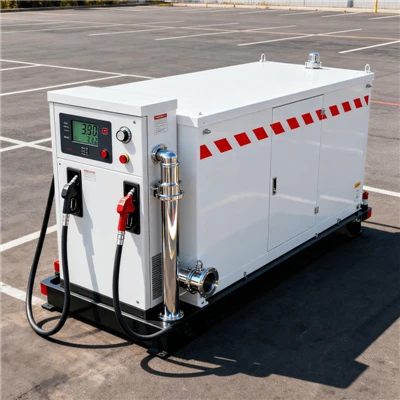
Mobile Explosion-proof Fuel Station References
- U.S. Environmental Protection Agency. Secondary Containment Requirements for Chemical Storage Tanks. EPA 505-F-19-002, 2019.
- Occupational Safety and Health Administration. Process Safety Management of Highly Hazardous Chemicals. 29 CFR 1910.119, 2022.
- National Fire Protection Association. Standard for the Storage and Handling of Hazardous Materials. NFPA 30, 2021.
- American Water Works Association. Guidelines for Chemical Storage Tanks in Industrial Facilities. AWWA M42, 2020.
- International Code Council. International Mechanical Code Requirements for Double-Walled Tanks. ICC IMC 2021.
Shandong Jingcai Industry and Trade Co., Ltd.
As one of the most professional double-walled tank manufacturers and suppliers in China, we also support customized service. With abundant experience, we warmly welcome you to wholesale high quality double-walled tank in stock here from our factory. Contact us for free sample.
Address: Caojiazhuang Village Industrial Park, Lingcheng Town, Qufu City, Jining City, Shandong Province.
E-mail: shandongjingcai888@gmail.com
WebSite: https://www.sdjingcaicn.com/
