Hey everyone, it’s Jake here from the connector accessories side of the business—you know, the guy who fields the 2 a.m. follow-up emails from aerospace and telecom engineers panicking about a high-frequency project that’s suddenly hitting snags. Let’s cut to the chase because I get asked this all the time: Can you actually use regular connector accessories in a high-frequency application? Spoiler alert: The answer isn’t a flat yes or no, and if you’re grabbing the first bag of end caps or strain reliefs you see on a supplier’s catalog, you might be setting yourself up for a headache. Connector Accessories
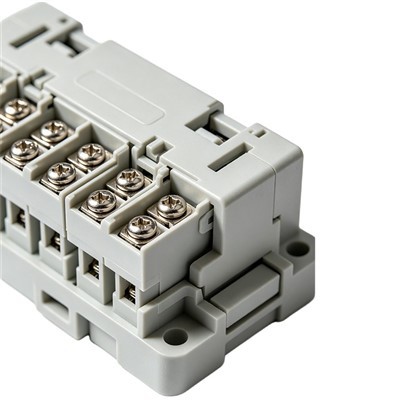
First, let’s ground this in what “high-frequency application” actually means these days. We’re not just talking about old radios anymore—we’re talking 5G small cells, satellite communications, automotive ADAS radar, even the high-speed data racks in data centers that push 100G+ signals. For context, high-frequency here is usually anything above 1 GHz, and at that point, even tiny, seemingly insignificant parts of a connector assembly can tank performance. I’ve seen it firsthand: a client built a 24 GHz radar prototype with off-the-shelf strain reliefs, and their signal attenuation jumped 3 dB just from the accessory’s plastic. For those who don’t speak RF jargon, that means half their power was lost before it even hit the antenna. Ouch.
So why do standard connector accessories work for low-frequency but not high? Most off-the-shelf parts are designed for durability and basic strain relief, not for managing electromagnetic (EM) behavior at high frequencies. Let’s break down the key pitfalls I see over and over. First is material choice. A lot of generic strain reliefs or booties are made of cheap, low-grade PVC or regular nylon. At high frequencies, those materials aren’t just insulators—they’re dissipating RF energy as heat, or even causing signal reflections. That client I mentioned earlier? Their PVC strain relief had a dielectric constant (that’s the measure of how a material interacts with EM fields) of 3.2 at 24 GHz, which is way too high for tight signal integrity. Compare that to a high-frequency-specific material like PEEK or LCP (liquid crystal polymer) that has a dielectric constant around 2.5, almost matching the connector’s PTFE insulators, so there’s no sudden jump that causes reflections.
Then there’s the issue of conductive continuity, or lack thereof. A lot of standard accessories don’t have any shielding properties. Even a tiny gap between your connector’s metal shell and the accessory can become a tiny antenna at high frequencies, picking up noise or leaking your signal. I had a telecom client last year working on a 18 GHz 5G backhaul link—they used a generic rubber boot that didn’t have a conductive coating, and their EMC (electromagnetic compatibility) testing failed hard. The signal was leaking out and causing interference with a neighboring tower, and they had to scrap the whole prototype because of it. High-frequency accessories need a conductive layer (usually nickel or copper, plated or molded in) to maintain the shield continuity of the connector assembly. Otherwise, you’re just asking for noise and signal loss.
Wait, but before you write off all accessories for high-frequency use—let’s talk about when they actually work, and when you need to step up. If your high-frequency application is, say, a test setup at 2 GHz where tolerance is a little looser, a standard accessory might get you by. But if you’re in a production environment, especially above 10 GHz, generic parts are a bad call. And here’s the thing: a lot of engineers don’t realize that there are connector accessories purpose-built for high-frequency use, designed with all these factors in mind.
Let’s get into what a high-frequency connector accessory actually needs to do, because it’s not just about fitting on the connector. First, dielectric matching is non-negotiable. As I mentioned earlier, the dielectric constant (Dk) of the accessory material has to be as close as possible to the connector’s insulators. Why? Because when EM signals move from one material to another with a big Dk difference, some of the signal bounces back instead of going through. That’s called reflection loss, and at high frequencies, even a tiny reflection can add up to big signal degradation. Also, the material has to have low loss tangent (Df)—that’s how much energy the material dissipates as heat. A high Df means more signal lost as heat, which is a double whammy for high-frequency gear that’s already running hot.
Next, shielding integration. The accessory has to mate seamlessly with the connector’s outer shell to maintain 360-degree shield continuity. A lot of standard strain reliefs just clip on, leaving a gap between the shell and the accessory, which creates a slot for signal leakage. High-frequency accessories use things like crimped metal ferrules or interference-fit conductive sleeves that lock tight to the connector’s shell, no gaps. Some even have integrated grounding tabs that connect to the system’s chassis, which is a must for EMC in high-frequency applications.
Then there’s mechanical design for signal integrity. At high frequencies, even the shape of the accessory can matter. For example, booties that taper too sharply from the connector to the cable can create discontinuities in the cable’s shielding, which is where noise can get in or out. High-frequency accessories have gradual tapers, or are designed to follow the cable’s natural bend radius without crimping the shielding. I worked with an aerospace client a while back that was building a satellite link at 28 GHz—they had a bootie that crimped their thin coax cable, and the signal insertion loss jumped by 1.2 dB right at the crimp point. We switched them to a tapered, flexible bootie that distributed the strain evenly, and that loss went down to 0.1 dB, which was well within their specs.
But wait, let’s address a common myth I hear all the time: “High-frequency accessories are way more expensive, so I’ll just skip them and use standard ones to save money.” Yeah, no—short-term savings lead to long-term costs. I’ve seen clients spend thousands on re-testing, prototype scrap, and even field failures because they tried to cut corners on accessories. Let’s do the math: a standard strain relief is $0.10 each, a high-frequency equivalent is $0.50 each. For 10,000 connectors, that’s a $4,000 difference upfront. But if you have a field failure at $10,000 per hour of downtime, plus replacement parts, you’re way ahead paying the extra $4k.
Now, what about when you should use connector accessories in high-frequency applications? Honestly, almost always—you’re not just putting a connector on a wire, you’re managing the cable’s strain, protecting the delicate connections from vibration (which is a huge issue for automotive and aerospace, where parts shake on the road or in flight), and maintaining that shield integrity. Skipping accessories leads to cracked connectors, frayed cables, and signal issues down the line. The key is picking the right accessories, not skipping them entirely.
Let’s talk about real-world examples to make this concrete. Take a 5G small cell base station. Those things have transceivers running at 24-40 GHz, and every connector on them needs accessories that can handle that frequency. We supply conductive strain reliefs made from LCP with a copper-nickel plating, dielectric constant 2.5, shield continuity of 85 dB up to 40 GHz. A client used our standard strain reliefs (not high-frequency) in their beta small cells, and after EMC testing, they had 10x more intermodulation distortion than allowed. Switched to our high-frequency strain reliefs, and they passed first time. That’s the difference between a product that gets deployed and one that gets scrapped.
Another example: automotive ADAS radar. 77 GHz radar is standard for adaptive cruise control, lane keep assist, all that good stuff. The connectors for these radars are tiny, and the accessories need to be flexible enough to handle the car’s vibration and temperature extremes (from -40°C to 125°C) without degrading the signal. Generic nylon strain reliefs get brittle at low temperatures, crack, and break the cable shielding. Our high-temperature, high-frequency strain reliefs use a modified LCP that stays flexible at -55°C and has Dk 2.6 at 77 GHz. A major German auto supplier tested our parts against three other brands, and ours had the lowest insertion loss over 500 temperature cycles—they now use us exclusively for their ADAS radar connectors.
Wait, but what if you’re working on a one-off prototype, not a mass production? Can you get away with a standard accessory then? Maybe, but I still wouldn’t recommend it. Prototypes are supposed to mimic production as closely as possible, right? If you use a generic part and your prototype works, but then you switch to production parts and it fails, you’re wasting weeks of rework. I tell all my prototype clients: use the same accessories you’ll use in production, even if it’s a small run. It saves you headache later.
Now, let’s get into how to pick the right high-frequency connector accessories, because it’s not just about buying the most expensive part. First, check the frequency rating. A lot of suppliers will clearly label accessories for up to 10 GHz, 20 GHz, etc.—don’t buy a part rated for 10 GHz for a 28 GHz application. Second, ask for material specs: Dk, Df, shielding effectiveness. Don’t just take their word for it—ask for test data at your specific frequency. Third, make sure it mates with your specific connector. I’ve seen guys buy an accessory that’s the right size, but the shape of the boot doesn’t match the connector’s flange, leading to gaps in shielding. Fourth, consider environmental factors: temperature range, vibration resistance, if it’s for outdoor use (UV resistance is a big one for telecom towers).
At the end of the day, the core takeaway is this: You can use connector accessories in high-frequency applications, but only if they’re designed for high-frequency use. Generic accessories are a ticking time bomb for signal loss, EMC issues, and field failures. If you’re working on a high-frequency project—whether it’s 5G, radar, data centers, aerospace, whatever—don’t cut corners on accessories. They’re not just a afterthought for durability; they’re a critical part of signal integrity.
If you’re not sure what accessories you need, or you’ve been having issues with signal loss or EMC testing, hit me up. We don’t do one-size-fits-all here—we’ll work with your specific frequency, connector type, and application specs to find the right accessories that keep your signals clean, your systems running, and you from pulling your hair out at 2 a.m. over a failed test. Reach out to our team anytime to chat through your project details.
Industrial Connectors References
- Ion, R., & Eleftheriades, G. V. (2021). Dielectric Material Selection for High-Frequency RF Applications. IEEE Transactions on Microwave Theory and Techniques.
- Zhang, L., et al. (2020). Shielding Effectiveness of Connector Accessories for 5G Millimeter-Wave Systems. International Symposium on Electromagnetic Compatibility.
- SAE International. (2019). Standard for High-Frequency Connectors for Automotive Radar Applications. SAE J2960.
- Johnson, H., & Graham, M. (2012). High-Signal Integrity Design. Prentice Hall.
Modelon Precision Industry (Suzhou) Co., Ltd.
With abundant experience, we are one of the most professional connector accessories manufacturers and suppliers in China. Welcome to buy customized connector accessories at competitive price from our factory. If you have any enquiry about pricelist, please feel free to email us.
Address: 1st Floor, Building 22, No. 2628 North Gate Road, Kunshan City, Jiangsu Province, P.R.China
E-mail: jessica_huang2025@163.com
WebSite: https://www.modeloncn.com/
