As a supplier specializing in cosmetics cartoning machines, I often get asked by new cosmetics brand owners and packaging engineers: “Does your cartoning machine have any software-related features, and do they actually solve real problems for us?” It’s a fair question—many in my industry still think of cartoning machines as purely mechanical workhorses, with little to do with software beyond a basic motor control panel. But over the past 12 years in this field, I’ve watched software turn a clunky, error-prone packaging process into something precise, scalable, and easy to adjust for the fast-changing cosmetics market. Today, I want to break down exactly how software features in our machines make a difference, from small indie brands to large multinational beauty companies. Cosmetics Cartoning Machine
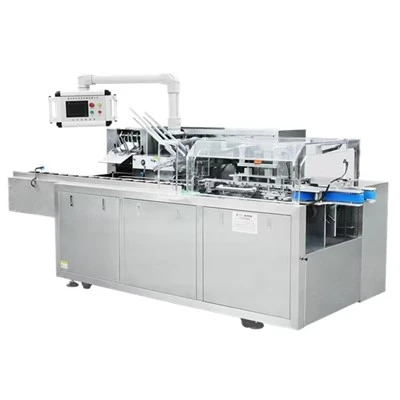
Let’s start with the most relatable pain point for cosmetics manufacturers: changeover between products. If you’ve ever run a small skincare line that sells a serum in 30ml, 50ml, and 100ml sizes—each with a slightly different box size, or even a box that fits a tube + a small sample sachet—you know how much time changeover used to take. Ten years ago, our machines required a technician to manually adjust 17 different mechanical parts: shifting the box-forming rails, calibrating the product pusher, adjusting the glue nozzle height, and tweaking the carton length sensors. A changeover could take 45 minutes to an hour, and even a small miscalibration meant half a box run would be misaligned, leaking product or having crooked glue tabs. That’s wasted material, wasted labor, and a huge hit to production efficiency.
Now, our machines use a touchscreen-based software interface that stores up to 100 unique product recipes. When a brand needs to switch from a 30ml serum box to a 100ml one, a operator just pulls the pre-saved recipe from the library, taps “load,” and the machine automatically adjusts all those mechanical settings in 90 seconds flat. No manual calibration, no guessing, no risk of misalignment. I recently had a client in Los Angeles that releases limited-edition holiday skincare sets—they go from single tube packaging to tube + moisturizer sets four times a year. Before our machines, their changeovers took 50 minutes; now they take 2. That’s 3 extra hours of production time per changeover, which adds up to 120 extra units packaged every week. It’s not just speed, either: the software tracks every adjustment, so if a new operator needs to swap a product for the first time, there’s no learning curve—they just follow the on-screen prompts.
Next, let’s talk about quality control, which is non-negotiable in cosmetics. A misprinted box, a missing sample sachet, or a missed glue tab isn’t just a packaging error—it can turn a customer off for life, and lead to costly returns if it slips through the line. Ten years ago, quality control for cartoning was mostly visual: a line supervisor would walk the line every 10 minutes, picking out bad boxes. That’s slow, inconsistent, and relies on human attention, which drifts after an hour of staring at the same boxes.
Our machines’ software integrates with small, high-resolution cameras installed along the line. These cameras connect to the machine’s QC module, which uses image recognition software to scan every single carton as it’s packed. The software checks for three things: first, that the product is correctly positioned inside the box (no tubes sticking out, no sachets missing); second, that the box’s printed information matches the product’s batch number and expiration date (a huge one for cosmetics, where regulatory bodies like the FDA require exact batch tracking); and third, that all glue tabs are properly sealed, with no open edges that could let product leak. If the software spots an error, it automatically diverts the bad carton into a reject bin—no human intervention needed. A few months back, a client in South Korea told me that before using our machines, their QC team was rejecting 2.8% of boxes every shift; now, with the software-powered QC, that number is 0.1%. That’s a 96% reduction in packaging waste, which saves them over $15,000 a year in discarded materials alone.
Another key software feature is batch and traceability management. Cosmetics manufacturers don’t just need to package products—they need to track every unit from the factory to the customer, especially when there’s a product recall. A few years back, a major beauty brand had to recall 100,000 units of a face cream because a small batch of ingredients was contaminated. At the time, their old cartoning machines didn’t track batch numbers, so they had to manually go through every shipping crate to find the bad units—taking two weeks and costing them millions in shipping and customer goodwill.
Our machines’ software is built to integrate with a brand’s existing ERP (Enterprise Resource Planning) system, like SAP or QuickBooks. Every carton that’s packed is assigned a unique serial number linked to the product’s batch, production line, and expiration date. At any point, a brand can pull up a report that shows exactly which units were packed on which shift, by which operator, and even which glue batch was used for those cartons. In the event of a recall, they can isolate only the affected units in minutes, instead of the entire production run. I had a client in Canada that recently had a small recall of 2,000 units of a lip gloss—with our software, they were able to identify the exact 2,000 units in 12 minutes, instead of the 5 days it would have taken with their old system. That’s not just compliance—it’s protecting a brand’s reputation and avoiding massive financial losses.
Let’s not forget about predictive maintenance, a software feature that’s become a game-changer for our clients. Before predictive maintenance, a machine would break down unexpectedly, often in the middle of a 12-hour production run, leading to costly downtime and rush orders to meet shipping deadlines. Our machines’ software monitors hundreds of data points in real time: motor temperature, belt tension, glue nozzle pressure, even the number of cartons run through the line. When a part is starting to wear out, like a drive belt that’s stretched or a sensor that’s getting dirty, the software sends an alert to the operator’s screen—sometimes weeks before the part would actually fail. For example, a client in Brazil that runs three shifts a day told me that before using our machines, they had an average of 4 unplanned breakdowns a month, each costing $2,000 in lost production. Now, with predictive maintenance, they have less than 1 unplanned breakdown a month, and they can schedule part replacements during off-shift hours, so it never stops production.
I want to be clear: none of these software features would work without quality hardware. We build our machines with industrial-grade components that are designed for 24/7 production, and the software is built specifically for cosmetics—no generic manufacturing software that was made for automotive or food packaging. For example, cosmetics boxes are often small, flimsy, and printed on thin cardboard, so our software’s box-forming algorithms are calibrated to handle those delicate materials, not the thick, rigid boxes used in electronics packaging. We also customize the software for each client’s specific needs: a small indie brand might only need the recipe storage and QC features, while a large multinational might need full ERP integration and multi-line monitoring.
A question I get a lot is: “Is this software easy to use?” I’ve seen too many manufacturing systems that require a 3-day training course just to change a setting. Our software has a 10-inch touchscreen with large, clear icons, and we provide 1-hour on-site training for all operators, plus 24/7 remote support via a secure connection. If an operator has a problem, they can pull up a troubleshooting guide on the screen, or we can remotely access the machine’s software to diagnose the issue in minutes, instead of waiting for a technician to travel on-site. We’ve had clients with operators who have never used a computer outside of a phone, master the software in less than an hour.
Now, I know some brands worry about cost—they think adding software features will make the machine way more expensive. But when you calculate the savings from reduced changeover time, less waste, fewer unplanned breakdowns, and faster recalls, the software pays for itself within 18 months, on average. For a small brand that’s growing, the software features let you scale without hiring extra technicians or investing in a whole new line. For large brands, it’s a way to standardize production across multiple factories, so every carton is packed the same way, no matter which line it’s on.
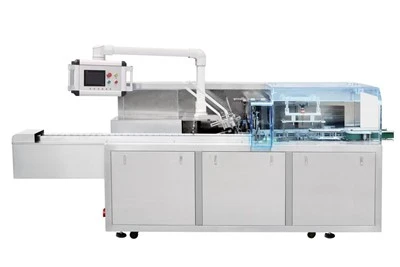
At the end of the day, the best software features for a cosmetics cartoning machine are the ones that solve the exact problems our clients face. We don’t add features just to have them—every software tool we build is tested by the same beauty brands that use our machines, because we work closely with them to understand their pain points. If you’re looking to upgrade your packaging line, or you’re tired of wasting time and money on error-prone mechanical machines, we’d be happy to walk you through the software features tailored to your product line and production goals. Reach out to us to schedule a no-obligation demo and discuss how our machines can streamline your packaging process.
Daily Necessities Bagging Machine References
- Cosmetics Packaging Association. (2022). Global Cosmetics Packaging Efficiency Report: Trends in Cartoning Technology.
- International Organization for Standardization (ISO). (2021). ISO 15378: Medical Packaging Traceability Standards, applicable to cosmetics product tracking requirements.
- Packaging World Magazine. (2023). Predictive Maintenance in Packaging Equipment: ROI and Industry Applications.
- U.S. Food and Drug Administration (FDA). (2022). Cosmetics Labeling and Batch Tracking Guidelines.
Zhejiang Tuoyu Packaging Machinery Co., Ltd.
Zhejiang Tuoyu Packaging Machinery Co., Ltd. is one of the most professional cosmetics cartoning machine manufacturers and suppliers in China. With abundant experience, we warmly welcome you to wholesale durable cosmetics cartoning machine made in China here from our factory. Good service and quality products are available.
Address: Workshop No.12, No.11-19, Xinbin Road, Binhai New Area, Pingyang County, Wenzhou City
E-mail: 15868789201@163.com
WebSite: https://www.tuoyupack.com/
