If you’ve ever stood behind a idling city bus, listening to its deep, steady rumble, you’re hearing the unsung work of a tiny, critical part of the engine: the valves. As a bus engine supplier, I get asked this question all the time—usually by new fleet managers, young technicians just out of trade school, or even bus drivers curious about what makes their ride move. It’s not rocket science, but it’s easy to take for granted how those little metal parts open and close perfectly thousands of times a minute, in sync with every stroke of the piston, to keep your bus running smoothly all day, every day. Bus Engine

Let’s start with the basics, to set the stage. A diesel bus engine (the most common type for heavy-duty routes) is a four-stroke machine, meaning it goes through four distinct steps every time the piston moves up and down inside the cylinder. Those steps are intake, compression, power, and exhaust. For each step to work, you need two valves per cylinder: an intake valve that lets fresh air and fuel mix in, and an exhaust valve that pushes spent gases out after combustion. If either valve is out of sync, your bus loses power, burns extra fuel, or even stalls mid-route. That’s why getting the valve system right isn’t just a technical detail—it’s the difference between a bus that runs all day without issues and one that’s stuck on the side of the road, costing fleets thousands in downtime.
Now, how do they actually open and close? It all starts with the camshaft, which is essentially a long metal rod with lobes (or “cams”) cut into it, one for each valve. The camshaft runs parallel to the crankshaft (the part that turns the piston’s up-and-down motion into rotational energy to move the bus) and is timed to spin exactly half as fast as the crankshaft. Why half? Because for every two full rotations of the crankshaft, the piston completes all four strokes, and each valve opens once. That sync between camshaft and crankshaft is non-negotiable—we line them up with timing marks on the gears during engine assembly, and that alignment stays tight for hundreds of thousands of miles.
When a cam lobe rotates, the high point of the lobe pushes against a series of parts that transfer that motion to the valve. On older mechanical engines, that chain is simple: the cam lobe presses directly on a lifter (sometimes called a tappet), which sits in a bore in the engine block. The lifter rides up the cam lobe, pushing a pushrod up through a hollow tube in the engine block to a rocker arm at the top of the cylinder head. The rocker arm acts like a lever: it pivots on a shaft, so when the pushrod pushes up one end of the rocker arm, the other end pushes down on the valve stem, compressing the spring that’s holding the valve closed. As the lobe continues to rotate, the lifter drops back down, the pushrod falls, and the rocker arm releases—so the valve spring, which is tightly coiled around the valve stem, pulls the valve closed again with enough force to seal the combustion chamber tightly, even at high pressure.
Newer bus engines use a different setup, called overhead cam (OHC), which skips the pushrod and lifter for a more direct system. In OHC engines, the camshaft sits right on top of the cylinder head, so the cam lobe presses directly on a rocker arm or even a small roller follower that’s attached to the valve stem. This design is more precise, reduces friction, and lets us open and close valves faster—important for the higher power needs of modern, heavy-duty buses that carry more passengers and meet stricter emissions rules. Either way, the core idea is the same: the cam’s shape dictates how far the valve opens, how long it stays open, and when it opens and closes, all calibrated to match the engine’s four-stroke cycle.
Now, let’s break down exactly what happens during each stroke, so you can see the valve work in real time. First, the intake stroke: the piston is at the top of the cylinder, and it starts moving down. Right as the piston begins to drop, the intake valve opens wide. That creates a vacuum in the cylinder, which pulls in a mix of clean air (filtered first, of course) and diesel fuel injected directly into the cylinder. The intake valve stays open until the piston reaches the bottom of its stroke, and then it closes tightly—no leaks here, because that would ruin the compression step.
Next is compression: both valves are closed, the piston moves back up to the top of the cylinder, squishing the air-fuel mix into a tiny space. At this point, pressure inside the cylinder can be up to 500 pounds per square inch, so the valves have to seal perfectly. If even a tiny bit of exhaust gas seeps past the exhaust valve, or the air-fuel mix leaks out the intake valve, compression drops, power goes down, and your bus uses way more fuel than it should. That’s why we design our valves and springs to handle that pressure—we test every valve assembly in our factory to make sure it doesn’t leak under pressure, even after 500,000 miles of use.
Then comes the power stroke: the compressed air-fuel mix ignites (either from compression heat in diesels, or a spark in gasoline engines, though those are rare for buses), creating a huge explosion that pushes the piston back down with massive force. That’s the power that turns the crankshaft and moves the bus. Both valves stay closed here, so none of that explosive energy escapes—all of it goes to moving the piston. The exhaust valve doesn’t open until the piston is back up at the top for the exhaust stroke.
Exhaust stroke: now the spent gases from combustion (think nitrogen, carbon dioxide, and tiny amounts of leftover fuel) have to get out. The exhaust valve opens, right as the piston starts moving up, and pushes all the gases out of the cylinder into the exhaust system, which leads to the muffler and after-treatment system (the part that cleans emissions to meet EPA rules). The exhaust valve stays open just long enough to get all the gases out, then closes again as the piston finishes its stroke, ready for the next intake stroke.
It sounds simple, but making those valves work reliably for a bus is a big deal. Buses don’t just drive short trips around town—they idle for hours, stop and start hundreds of times a day, run through extreme hot and cold weather, and carry heavy loads. A passenger car engine might last 150,000 miles before needing valve work, but a heavy-duty bus engine needs to last 300,000, 400,000, even 500,000 miles. That’s why we use materials for valves that can handle extreme heat (exhaust valves get up to 1,500 degrees Fahrenheit, which is hotter than most kitchen ovens)—we use stainless steel or even alloys like nimonic that resist corrosion and hold up to constant pressure. The valve springs are made to withstand millions of cycles, too; a single bus engine’s valves open and close about 15 times per second at idle, and up to 50 times per second when cruising on the highway. That adds up to billions of cycles over a bus’s lifetime—no small feat for a small, 2-inch metal part.
I often see fleet managers try to cut corners when it comes to valve maintenance, and that’s where problems start. If the valve clearance (the tiny gap between the cam lobe and the valve stem, which lets the valve close fully) is off, you get leaks, lost power, and higher emissions. On older engines, that gap adjusts with shims or screws, so we recommend checking it every 15,000 miles. Newer engines have hydraulic lifters that automatically adjust the gap, so you don’t have to do manual adjustments, but even those can wear out over time. That’s why regular service isn’t just a suggestion—it’s how you keep your bus on the road, not in the shop.
As a bus engine supplier, my team and I don’t just sell parts—we build systems that are designed for the unique demands of commercial transit. We’ve spent years refining our valve systems, working with transit agencies across North America, to make sure they stand up to the rigors of daily use. We test every prototype in real-world conditions, not just a lab: we put engines on test benches that simulate idling, stop-and-go traffic, and highway speeds, and run them for thousands of hours to catch any issues before they reach the road.
If you’re a fleet manager who’s ever wondered why your bus’s fuel economy is slipping, or noticed it’s losing power on steep routes, chances are good your valves are the culprit. Or if you’re a technician looking for reliable replacement parts that fit your engine exactly, we stock genuine valve assemblies, lifters, camshafts, and all the components you need, engineered to work seamlessly with our engines and most common heavy-duty bus models.
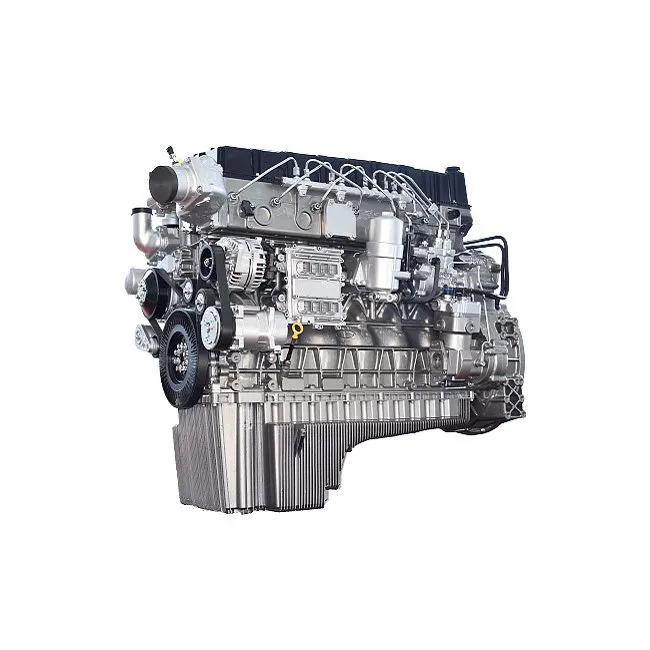
We’re here to help, whether you’re outfitting a new fleet, servicing an existing engine, or troubleshooting a persistent valve issue. We’ve worked with every size of transit operation, from small suburban bus companies to large city fleets, and we know how important uptime is for your business. Don’t let a small valve problem turn into a costly breakdown—reach out to our team to discuss your needs, get custom recommendations for your bus engine, or learn more about our valve systems and other engine components. We’ll make sure you get the right parts, expert advice, and support to keep your buses running smoothly, mile after mile.
Engine Parts References
- Heywood, J.B. Internal Combustion Engine Fundamentals. McGraw-Hill Education, 2018.
- Heavy Duty Diesel Engine Valvetrain Technology and Performance Requirements. Society of Automotive Engineers (SAE) International, 2020.
- Narrow-Band Diesel Engine Valve Materials for Heavy-Duty Transit Applications. International Journal of Engine Research, vol. 22, no. 4, 2021, pp. 1245-1262.
- Transit Fleet Engine Maintenance Best Practices. American Public Transportation Association (APTA), 2022.
Guangxi Yuchai International Trade Co., Ltd.
Guangxi Yuchai International Trade Co., Ltd. is one of the most professional bus engine manufacturers and suppliers in China, specialized in providing high quality customized service. We warmly welcome you to wholesale bulk bus engine for sale here from our factory. Contact us for quotation.
Address: 19th Floor, Yuchai Building, No.2, Yuchai Road, Yuzhou District, Yulin, Guangxi, China
E-mail: yuchaiglobal@yuchai.com
WebSite: https://www.yuchaiinternational.com/
