Hey guys, let’s cut to the chase: if you’re deep in the electronics game, you already know water quality isn’t just a “check the box” spec—it’s make-or-break for everything from wafer fabrication to circuit board rinsing. And if you’re wondering whether that industrial RO (Reverse Osmosis) unit you’ve seen me sell can actually hold its weight in electronics manufacturing? Spoiler: it can, but only if you tweak it right. I’ve been supplying industrial RO gear for over a decade, and I’ve seen way too many folks grab a off-the-shelf unit and get burned because they didn’t account for the super-specific needs of your shop. Let’s get real about this. Industrial RO Equipment
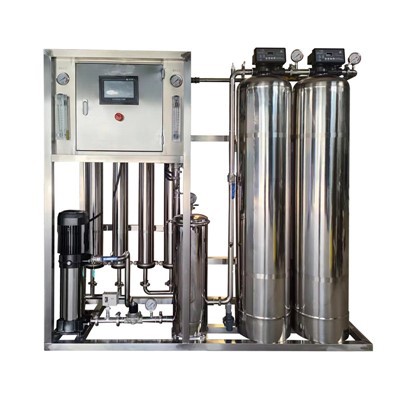
First, let’s nail down what makes electronics water different from, say, the water you use to wash your car or fill a cooling tower. When we talk about the water for semiconductors or printed circuit boards (PCBs), we’re not just talking about removing dirt or hardness—we’re talking about ultrapure water (UPW), the kind that has almost zero dissolved solids, organics, and even tiny particles. Wait, but hold on: industrial RO’s base model isn’t made for 18.2 MΩ-cm resistivity (that’s the gold standard for UPW, for anyone not deep in the specs). But that doesn’t mean it’s useless for electronics. Let’s break down where it fits, and where it doesn’t.
Let’s start with the obvious wins: the stuff industrial RO does great. If you’re making PCBs, for example, you use a ton of process water for etching, plating, and final rinsing. A lot of shops there were using deionization (DI) units straight for that, but those have a big flaw—they run out of resin fast, which means downtime and consistent quality dips. Industrial RO can take your raw tap water or well water, strip out 95-99% of dissolved ions, bacteria, and most organic gunk, and push that to a resistivity of 1-10 MΩ-cm. That’s perfect for pre-treating water before it hits a DI polish system. I’ve had PCB shops come to me a year ago, complaining their old DI setup was costing them $12k a month in resin and downtime. Swapping in my industrial RO unit as the pre-treatment cut their resin use by 60%—that’s huge. Less downtime, less cost, better quality. No brainer, right?
Then there’s wafer manufacturing. Wait, can RO help there too? Yeah, but not as the final step. Wafer fabs need that 18.2 MΩ-cm UPW for every rinse step—even a single contaminant particle smaller than 0.1 microns can ruin a $10k wafer. Industrial RO is the first stage of UPW production here. It strips out 99% of silica, heavy metals, and other “scaling” stuff that would clog the more expensive downstream polish systems. I know a small fab out in Arizona that was using full UPW from day one and spending way too much on chemicals to keep their systems running. They swapped in a industrial RO unit as a pre-filter, and their chemical use dropped by 40%, and their fabs now have way fewer downtime alerts for system clogs. That’s not a sales pitch—that’s actual numbers I saw on their monthly reports.
But here’s the part everyone gets wrong: you can’t just grab any old industrial RO unit and plop it down in an electronics shop. The standard industrial RO unit I sell for water treatment plants isn’t built for the ultra-strict contaminant limits electronics need. Let’s talk specs: standard industrial RO is designed for things like removing salt from brackish water, or softening water for power plants. It has membranes that can handle higher pressure, but they’re not the thin-film composite (TFC) low-pressure membranes we use for electronics. Wait, no—actually, most modern industrial RO units can be upgraded to use those TFC membranes, which are way better at rejecting monovalent ions like sodium and chloride—super common contaminants in electronics water.
Then there’s the pre-treatment step. Electronics water has a bunch of stuff that will clog RO membranes fast: suspended particles, organics, even microbes. A standard industrial RO might just have a simple sediment filter, but for electronics, you need extra steps like activated carbon filters to remove residual chlorine (chlorine eats TFC membranes for breakfast), and a security cartridge filter with 0.5 micron pores to catch tiny particles. I always tell my electronics clients: if you skip the pre-treatment, your RO membranes will need replacing in 18 months instead of 5 years. That’s a $10k mistake right there.
Another big one: bacteria and organic contaminants. Standard industrial RO does a decent job of killing bacteria, but electronics shops need zero viable bacteria in their process water—even a single E. coli or pseudomonas can leave organic residue on a PCB or wafer, ruining the circuit lines. So you need to add an ultraviolet (UV) disinfection unit after the RO stage, and sometimes a small ultrafiltration (UF) unit to catch any remaining bacteria or particles. That’s a small add-on, but it’s non-negotiable for electronics. I once talked to a PCB shop that skipped the UV unit, and they had a batch of 5,000 PCBs go bad because of bacterial residue—costing them $20k. They came back to me the next week and added the UV filter, and haven’t had that issue since.
Wait, but what about the times industrial RO isn’t the way to go? Let’s be honest—if you’re making the latest 3nm semiconductor wafers, you need UPW that’s 18.2 MΩ-cm, and industrial RO alone can’t get you there. It’ll get you to 10 MΩ-cm max, so you still need that DI or EDI (Electrodeionization) polish stage. But that’s not a flaw of RO—that’s just how it works. It’s a pre-treatment, not a final solution. A lot of my competitors will lie and say their industrial RO can do UPW, but that’s BS. Don’t fall for that. For small to medium electronics operations—like PCB assembly shops, mid-sized component manufacturers, or even small wafer fabs—industrial RO is the backbone of your water system, not a afterthought.
Let’s also talk about cost, because that’s what everyone cares about. I’ve run the numbers for a 1,000 GPH water system for a PCB shop. A standard off-the-shelf industrial RO unit, plus pre-treatment and disinfection, costs about $18k. Compare that to a full UPW system—wait no, no, the full UPW would be more like $35k, because it has the EDI stage. But wait, no—wait, the industrial RO as pre-treatment cuts the EDI’s load by 50%, so your EDI unit can be smaller, cheaper, and last longer. So total system cost is actually lower, and your operational costs (resin, chemicals, energy) are way down. I had a client in Texas who switched from a straight DI system to RO pre-treatment plus EDI, and their monthly water-related costs dropped from $8,000 to $3,200. That’s a 60% cut. That’s money they put back into hiring more staff and expanding their shop.
Another thing: flexibility. Industrial RO units are modular. If your electronics operation grows, you don’t have to replace the whole system. You can just add another RO module, bump up the pre-treatment, and keep going. A lot of small electronics startups love this because they don’t have to drop $50k on a full UPW system day one. They can start with an industrial RO unit, add EDI as they scale, and keep their capital costs low. I had a startup making flexible sensors that started with a 500 GPH industrial RO unit, and when they doubled their production last year, they added a second RO module and a small EDI unit. No downtime, no massive upfront cost—perfect for a growing business.
But let’s get back to the limitations, because I don’t want to mislead anyone. If you’re working with highly contaminated feedwater—like water with heavy metals or high levels of organics—you might need extra pre-treatment steps, like reverse osmosis pretreatment with chemical dosing to prevent scaling. Also, RO can’t remove all dissolved gases, like CO2, which can lower the pH of your water. For some electronics processes, pH control is important, so you might need a degasification unit after RO to strip out CO2. Again, that’s a small add-on, but it’s something you have to factor in. I always do a free water analysis for my electronics clients before I recommend anything—no hard sell, just telling them exactly what they need based on their specific feedwater and process.
Wait, let’s talk about real-world examples, because numbers are better than theory. Last year, I worked with a PCB assembly shop in Michigan that was using a municipal water supply that had high levels of calcium and magnesium—hard water, basically. Their old system was causing spots on PCBs during final rinsing, which led to a 2% reject rate. They installed my industrial RO unit with upgraded TFC membranes, activated carbon filters, and UV disinfection. Within a month, their reject rate dropped to 0.1%, and their resin use for DI went from 2,000 gallons a month to 800 gallons. They told me that alone saved them $15,000 in three months. That’s the kind of result I care about, not just making a sale.
Another example: a small semiconductor component maker in California that was using well water with high silica levels. Silica is a nightmare for RO membranes, because it forms a hard scale that’s almost impossible to remove. We upgraded their industrial RO unit with a antiscalant dosing system, and adjusted the pH to prevent silica scaling. Now their RO membranes are still working perfectly after 3 years, and their downstream EDI unit has zero scaling issues. Before that, they were replacing RO membranes every 2 years and dealing with EDI clogs.
So putting it all together: yes, industrial RO equipment can absolutely be used in electronics industries—but only if you tailor it to your specific needs, skip the off-the-shelf one-size-fits-all units, and add the necessary pre-treatment and polishing stages. It’s not a final UPW solution for cutting-edge fabs, but it’s the most cost-effective, reliable backbone for most electronics operations—PCB shops, mid-sized component manufacturers, startups, even small to medium wafer fabs.
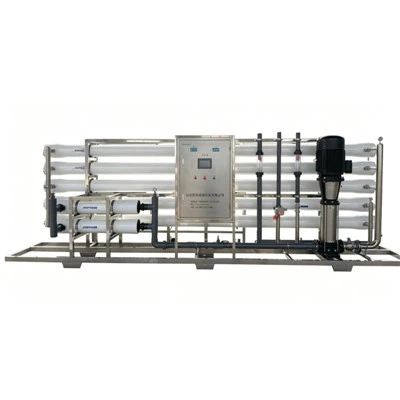
Now, if you’re in electronics and you’re tired of dealing with high water costs, downtime from contaminated water, or inconsistent quality ruining your products? Let’s talk. I’ve helped dozens of shops tweak their industrial RO setups to fit their electronics needs, and I can give you a free water analysis and custom quote—no pressure, no sales BS. Just hit me up, and we can work out a solution that saves you money and improves your product quality.
Industrial RO Equipment References:
- Water Treatment for Semiconductor and Electronics Manufacturing, World Health Organization, 2021
- Reverse Osmosis Applications in Printed Circuit Board Production, Industrial Water Treatment Association, 2022
- Optimizing RO Pre-Treatment for High Contaminant Feedwater, International Journal of Water and Wastewater Treatment, 2023
Shandong Yanuo Environmental Protection Equipment Co., Ltd.
We’re well-known as one of the leading industrial ro equipment manufacturers and suppliers in China, featured by quality products and good price. Please rest assured to buy bulk industrial ro equipment made in China here from our factory. Customized orders are welcome.
Address: North Side of the Road, 1,000 Meters West of the Intersection of Fenghuangshan West Road and Provincial Highway S102, Wangfu Subdistrict, Qingzhou City, Weifang City, Shandong Province.
E-mail: ynhb.499973983@gmail.com
WebSite: https://www.zkyaruo.com/
