Hey there! I’m a supplier of Air Cooled Heat Exchangers, and I often get asked, "What’s the cost of an air cooled heat exchanger?" Well, let’s dive right into it and break down the factors that influence that cost. Air Cooled Heat Exchangers
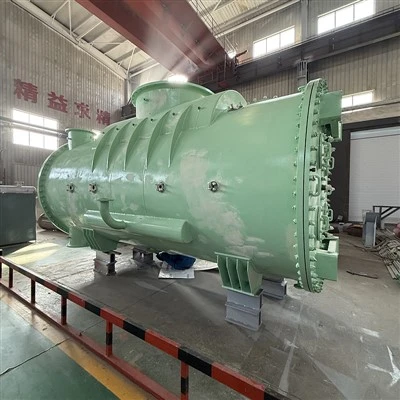
First off, the size of the heat exchanger plays a huge role. Just like with a lot of things, bigger usually means more expensive. A small – scale air cooled heat exchanger, say one for a small industrial lab or a small – sized manufacturing unit, is gonna be way cheaper than the ones used in large – scale power plants or big chemical refineries. The larger the heat exchanger, the more materials are needed to build it. You need more metal for the frames, more tubes for the heat transfer process, and a larger fan system to cool the air. All these extra materials add up to a higher price tag.
The materials used in the construction are another major factor. There’s a wide range of materials you can choose from, and the cost varies a lot. For example, if you go for a heat exchanger made with stainless steel, it’s gonna cost more than one made with carbon steel. Stainless steel is more resistant to corrosion, which makes it a great choice for environments where the heat exchanger will be exposed to harsh chemicals or moisture. But that extra durability comes at a cost. On the other hand, if corrosion isn’t a big concern in your application, carbon steel can be a more budget – friendly option.
The design complexity also affects the price. A simple, standard – design air cooled heat exchanger is generally less expensive. These are the ones with basic configurations and relatively straightforward installation processes. However, if you need a custom – designed heat exchanger, things get pricier. Maybe you have a specific space constraint in your facility, or you need it to work with a unique fluid or under special operating conditions. The engineers have to put in more time and effort to come up with a design that meets your requirements. This includes doing detailed calculations, creating special blueprints, and sometimes even conducting tests to ensure the design works. All this extra work means higher costs.
The brand and the manufacturer can also influence the cost. Established brands that have a reputation for high – quality products usually charge more. They’ve invested a lot in research and development, and their products often come with better warranties and after – sales support. But just because a brand is well – known doesn’t always mean it’s the best option for you. There are also some smaller manufacturers that offer great – quality heat exchangers at more competitive prices. You just need to do your homework and find out which ones have good reviews and a track record of delivering reliable products.
Let’s talk about the operating conditions. If the air cooled heat exchanger has to operate in extreme conditions, like high – temperature environments or areas with high levels of dust or debris, it needs to be built to withstand those challenges. For high – temperature applications, the materials used need to have high – temperature resistance, which can be more costly. And if there’s a lot of dust or debris in the air, the heat exchanger may need additional filtration systems or self – cleaning mechanisms. These add – ons increase the overall cost of the heat exchanger.
Now, let’s get into some numbers. A small, basic air cooled heat exchanger for a simple application might cost anywhere from a few thousand dollars. This could be something like a unit used to cool a small – scale electrical panel. On the other hand, a large, custom – designed heat exchanger for a major industrial project can cost hundreds of thousands of dollars or even more. For example, the heat exchangers used in a large – scale petrochemical plant, which need to handle high – volume and high – temperature processes, can be extremely expensive due to their large size, complex design, and the need for high – quality, corrosion – resistant materials.
But don’t just focus on the initial purchase price. You also need to think about the long – term costs. Energy consumption is a big one. An inefficient heat exchanger is going to use more electricity to run the fans and pumps, which means higher energy bills over time. So, it might be worth spending a bit more upfront on a more energy – efficient model. Maintenance costs are another factor. Some heat exchangers are easier to maintain than others. If a unit is designed in a way that makes it difficult to access the internal components for cleaning or repairs, it’s gonna cost you more in the long run.
When it comes to installation, that’s yet another cost. The installation process can vary depending on the size and complexity of the heat exchanger. A small, simple unit might be relatively easy to install and you could even do it yourself if you have the right skills. But for larger, more complex heat exchangers, you’ll probably need to hire a professional installation team. This can add a significant amount to the overall cost.
If you’re in the market for an air cooled heat exchanger, don’t make a hasty decision. Take your time to assess your needs. Think about the size of the unit you need, the materials that are suitable for your application, and the operating conditions. Consider the long – term costs as well as the initial purchase price. And don’t be afraid to shop around. Get quotes from different suppliers and compare them. Look at not just the price but also the quality of the product, the brand reputation, and the after – sales support.
We, as a supplier of Air Cooled Heat Exchangers, are here to help you make the best decision. We’ve got a wide range of heat exchangers to choose from, whether you need a small, standard unit or a large, custom – designed one. Our team of experts can work with you to understand your specific requirements and recommend the most suitable product for your needs.

If you’re interested in learning more about our air cooled heat exchangers or getting a quote, we’d love to hear from you. Just reach out to us, and we’ll have a detailed discussion about your project and how we can meet your needs. Let’s work together to find the perfect air cooled heat exchanger for you!
Floating Head Heat Exchangers References
- "Heat Exchanger Design Handbook" by Hewitt, G. F.
- "Industrial Heat Exchangers: Selection, Rating, and Thermal Design" by Mukherjee, H. K.
Shandong Meiling International Trading Co., Ltd.
We are one of the most professional air cooled heat exchangers manufacturers and suppliers in China, featured by quality products and good service. Please feel free to wholesale advanced air cooled heat exchangers made in China here from our factory. Customized orders are welcome.
Address: No. 998 Niushan Road, Linzi District, Zibo City, Shandong Province
E-mail: dingxiaoli@sdmeiling.com.cn
WebSite: https://www.ml-heatexchanger.com/
